

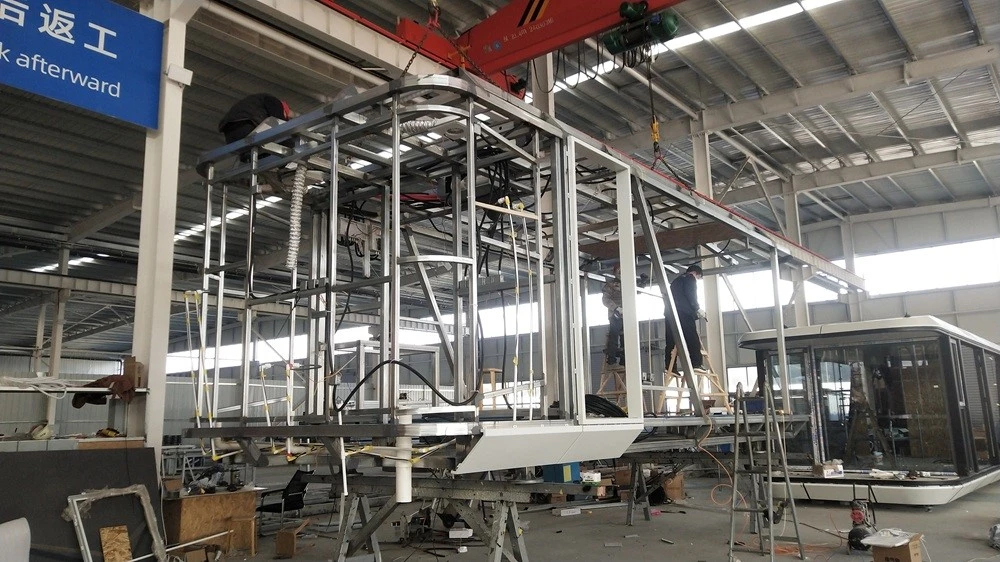
At the beginning of the modular homes process, engineers establish a precise structural skeleton based on the capsule's intended application, dimensions, transportation requirements, and environmental conditions. High-strength frames, lightweight panels, and carefully calculated connection points create a stable foundation while keeping the overall weight under control.
For manufacturers, this scientific approach is essential for producing quality prefab homes consistently. Instead of relying entirely on manual craftsmanship, every major component follows engineered specifications, allowing the same standards to be reproduced across different projects.
Manufacturing Process
Inside a professional modular homes factory, production is divided into controlled stages. Material preparation, frame assembly, wall and roof installation, electrical integration, interior finishing, inspection, and final testing are organized according to standardized workflows.
This factory-based approach allows mobile home manufacturing companies to improve production efficiency while reducing installation errors. It also makes customized solutions easier to manage. From a compact prefab dormitory to a premium prefabricated modular container house, different layouts can be produced while maintaining a consistent manufacturing standard.
The same philosophy supports products such as a pre fab shipping container, pre fab shipping container home, prefab folding container house, and other forms of portable living containers. Components are manufactured accurately in the factory before being transported for assembly or final positioning.
Design of Concealed Engineering
What makes a space capsule truly comfortable is often hidden from view. Electrical wiring, water supply, drainage, insulation, ventilation, and other utility systems must be integrated into the structure without compromising the interior appearance.
A well-designed house modular system reserves dedicated routes and service spaces for these installations. This makes maintenance easier while protecting critical components from unnecessary exposure.
Concealed engineering also contributes to energy efficiency and long-term durability. Proper insulation layers can help stabilize indoor temperatures, while carefully planned ventilation systems support a healthier living environment. Whether the project involves moving container homes, mobile homes, or permanent modular accommodation, these hidden details directly affect the user experience.
Standardized Quality System
Quality is not a final inspection-it is built into every stage of manufacturing. Professional factories establish quality checkpoints from incoming material inspection to structural welding, dimensional verification, electrical testing, waterproofing inspection, and final appearance checks.
This systematic approach enables manufacturers to deliver cutting edge modular homes without sacrificing reliability. Each finished unit should meet defined standards before leaving the factory, whether it is a luxury space capsule, a container house container house solution, or a compact mobile residence.
For buyers comparing container home, modular homes, and mobile home solutions, the real value lies in the manufacturing system behind the product. A transparent production process, dependable supply chain, strict quality control, and professional after-sales support transform prefabricated construction from a simple alternative into a reliable modern housing solution.