

What is the bending strength of aluminum veneer?
As a seasoned supplier of aluminum veneer, I often get asked about the bending strength of this versatile material. Aluminum veneer has gained widespread popularity in the construction and decoration industries due to its light - weight, corrosion - resistance, and aesthetic appeal. But understanding its bending strength is crucial for its proper application in various projects.
Understanding Bending Strength
Bending strength, also known as flexural strength, refers to the maximum stress that a material can withstand while being bent before it fractures or fails. For aluminum veneer, this property is of great significance as it is often used in applications where it needs to be shaped or curved. For example, in architectural facades, aluminum veneer may be bent to create unique and modern designs.
Factors Affecting the Bending Strength of Aluminum Veneer
- Alloy Composition
Aluminum veneers are made from different aluminum alloys, and each alloy has its own unique mechanical properties. For instance, alloys with a higher content of magnesium and silicon, such as 6061 - T6, generally have better strength and corrosion - resistance. These alloys can withstand higher bending stresses compared to pure aluminum or some other low - strength alloys. The addition of alloying elements changes the internal structure of the aluminum, making it more resistant to deformation under bending forces. - Thickness of the Veneer
Thicker aluminum veneers typically have higher bending strength. As the thickness increases, the cross - sectional area of the material available to resist the bending moment also increases. For example, a 3 - mm thick aluminum veneer will be able to withstand more bending force than a 1 - mm thick one. However, it's important to note that thicker veneers are also heavier, which may pose challenges in some applications where weight is a critical factor. - Surface Treatment
The surface treatment of aluminum veneer can also have an impact on its bending strength. For example, anodizing is a common surface treatment that forms a hard, protective oxide layer on the surface of the aluminum. This layer can enhance the corrosion - resistance of the veneer, but in some cases, it may also slightly affect the bending properties. If the anodized layer is too thick or has internal stresses, it could potentially lead to cracking during bending. On the other hand, powder coating, which provides a decorative and protective finish, usually has a minimal impact on the bending strength as long as the coating is properly applied.
Measuring the Bending Strength of Aluminum Veneer
To accurately determine the bending strength of aluminum veneer, standardized testing methods are used. One of the most common methods is the three - point bending test. In this test, a sample of the aluminum veneer is placed on two supports, and a load is applied at the center of the sample. The load is gradually increased until the sample fractures, and the maximum load and the corresponding deflection are recorded. From these measurements, the bending strength can be calculated using the appropriate formulas.
Applications and Bending Strength Requirements
- Architectural Facades
In architectural facades, aluminum veneer is often used to create large - scale, visually appealing structures. The bending strength requirements depend on the design of the facade. For simple, flat facades, the bending strength requirements may be relatively low. However, for facades with complex curves and shapes, the veneer needs to have sufficient bending strength to maintain its shape and integrity over time. For example, in a building with a wave - shaped facade, the aluminum veneer must be able to withstand the bending forces caused by wind loads and its own weight. - Interior Decoration
In interior decoration, aluminum veneer is used for various purposes such as wall panels, ceiling tiles, and furniture components. The bending strength requirements in these applications are usually lower compared to architectural facades. However, for applications where the veneer may be subject to some physical impact or where it needs to be bent to fit a specific design, a certain level of bending strength is still necessary. For example, in a modern - style interior with curved wall panels, the aluminum veneer should be able to bend without cracking to achieve the desired aesthetic effect.
Our Aluminum Veneer Products and Bending Strength
At our company, we offer a wide range of aluminum veneer products with different alloy compositions, thicknesses, and surface treatments to meet the diverse needs of our customers. Our Brushed Aluminum Plate is not only aesthetically pleasing with its unique brushed finish but also has good bending strength, making it suitable for both interior and exterior applications. The alloy used in this product is carefully selected to ensure a balance between strength and formability.
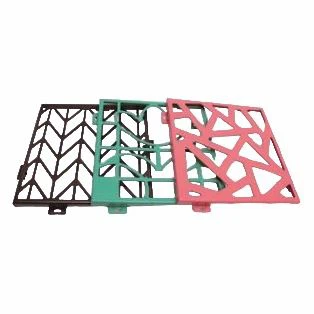

Our Engraved Aluminum Plates are another popular choice. The engraving process adds a decorative element to the veneer, and at the same time, we ensure that the bending strength is not compromised. These plates can be bent to create interesting shapes for architectural and interior design projects.
For Elevator Door Frame Protection, we provide aluminum veneer with high - quality surface treatment and appropriate bending strength. Elevator door frames are subject to frequent use and potential impacts, so the veneer needs to be able to withstand these forces without deforming or cracking.
Conclusion
The bending strength of aluminum veneer is a complex property that is influenced by multiple factors such as alloy composition, thickness, and surface treatment. Understanding these factors is essential for selecting the right aluminum veneer for different applications. Whether you are an architect, a designer, or a contractor, choosing the appropriate aluminum veneer with the right bending strength can ensure the success of your project.
If you are interested in our aluminum veneer products and would like to discuss your specific requirements, we invite you to contact us for a detailed consultation. Our team of experts is ready to assist you in selecting the best - suited aluminum veneer for your project.
References
- ASM Handbook Committee. (2000). ASM Handbook, Volume 2: Properties and Selection: Nonferrous Alloys and Special - Purpose Materials. ASM International.
- Aluminum Association. (2019). Aluminum Design Manual. Aluminum Association.