

Hey there! I'm part of a Design Tiny Prefab Homes supplier, and let me tell you, designing these little gems comes with its fair share of challenges. In this blog, I'm gonna break down some of the most significant design hurdles we face when creating tiny prefab homes.
Space Utilization
One of the biggest challenges in designing tiny prefab homes is making the most of limited space. Unlike traditional houses, where you've got plenty of room to spread out, tiny homes require a whole new level of creativity. Every square foot counts, and we need to ensure that each area serves multiple purposes.
For example, a living room might also double as a guest bedroom. We often use fold - out furniture, like Murphy beds that can be tucked away during the day to free up space for seating. Another common solution is built - in storage. Under - bed drawers, wall - mounted cabinets, and hidden compartments are all great ways to keep the living area clutter - free.
But it's not just about squeezing in storage and multi - functional furniture. We also have to consider the flow of the space. People need to be able to move around comfortably without feeling cramped. That means carefully planning the layout so that there are no awkward bottlenecks or areas that are difficult to access.
Structural Integrity
Despite their small size, tiny prefab homes need to be just as sturdy as larger houses. They have to withstand various weather conditions, from strong winds to heavy snow. The challenge here is to design a structure that is both lightweight (for easy transportation) and strong enough to last.
We use high - quality materials that are both durable and lightweight. Steel and aluminum frames are popular choices because they offer excellent strength - to - weight ratios. However, working with these materials requires specialized knowledge and skills. We have to ensure that the frame is properly engineered and that all the connections are secure.
Another aspect of structural integrity is the foundation. Since tiny homes are often built on wheels or a lightweight foundation, we need to make sure that they are stable. This might involve using leveling systems or additional support structures to prevent the home from shifting or swaying.
Utility Systems
Installing utility systems in a tiny prefab home is no easy feat. There's limited space for plumbing, electrical, and HVAC systems, and we have to find ways to make them as efficient as possible.
Plumbing is a particular challenge. We need to fit all the necessary pipes and fixtures into a small area without creating a maze of tangled lines. This often means using compact fixtures, like low - flow toilets and small - scale sinks. We also have to consider water storage and waste management. Some tiny homes use alternative water sources, like rainwater harvesting, which adds another layer of complexity to the plumbing design.
Electrical systems also need to be carefully planned. We have to balance the power needs of the home with the available space for wiring and electrical panels. Energy - efficient appliances are a must, and we often incorporate renewable energy sources, such as solar panels, to reduce the home's reliance on the grid.

HVAC systems are crucial for maintaining a comfortable temperature inside the tiny home. However, traditional heating and cooling units can be bulky and energy - intensive. We look for compact, high - efficiency HVAC solutions that can heat or cool the small space effectively without taking up too much room.
Aesthetics and Customization
Just because a home is tiny doesn't mean it can't be beautiful. In fact, many customers are looking for a unique and stylish design that reflects their personality. But achieving the right aesthetic in a small space can be tricky.
We need to choose the right colors, materials, and finishes to create a cohesive look. Light colors are often used to make the space feel larger, while natural materials can add a warm and inviting touch. However, we also have to balance aesthetics with practicality. For example, a beautiful but delicate flooring material might not be suitable for a high - traffic area.
Customization is another important factor. Customers often have specific ideas about how they want their tiny home to look and function. We need to be able to incorporate these custom features into the design while still maintaining the overall integrity of the structure. This might involve modifying the layout, adding unique fixtures, or using special materials.
Transportation and Assembly
As a prefab home supplier, we have to consider the logistics of transporting and assembling the homes. Tiny homes are designed to be portable, but they still need to fit within the legal size and weight limits for transportation.
We have to design the homes in a way that allows them to be easily disassembled and reassembled at the final location. This often means using modular construction techniques. Each module can be built in our factory and then transported to the site for assembly. However, coordinating the transportation and assembly process can be challenging, especially if the site is in a remote or difficult - to - access location.
Meeting Regulations and Codes
Tiny prefab homes are subject to a variety of regulations and codes, which can vary depending on the location. These regulations cover everything from structural safety to energy efficiency.
We have to stay up - to - date with all the relevant codes and ensure that our designs comply with them. This can be a time - consuming and complex process, as the regulations can change frequently. For example, some areas have specific requirements for the size and location of windows for emergency egress, while others have strict energy efficiency standards.
Some Solutions and Our Offerings
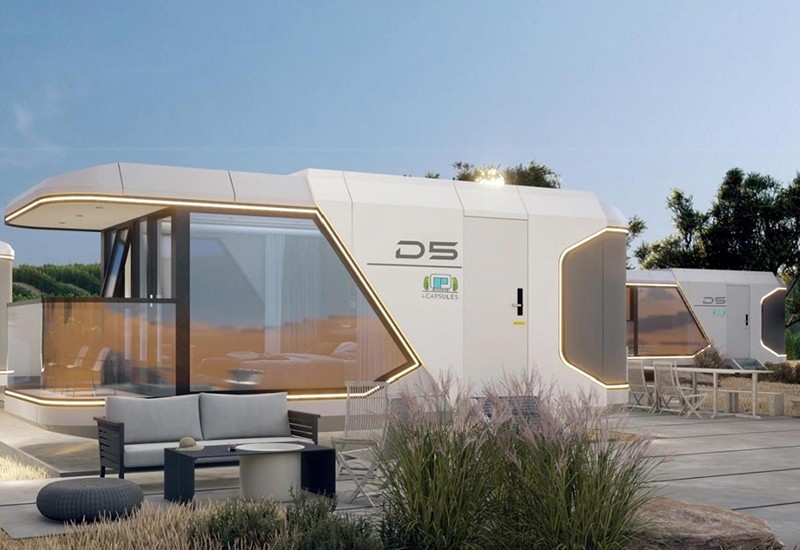
Despite these challenges, we've come up with some great solutions. We offer a range of innovative designs, such as the Modular Capsule House. This unique design maximizes space utilization while still providing a comfortable living environment. It features a modular structure that can be easily customized to meet the customer's needs.
Another option is the Mobile Space Capsule House. This is perfect for those who want a portable and stylish home. It's designed to be easily transported and can be set up in a variety of locations.
Our Prefab Space Capsule House is a great example of how we balance structural integrity, utility systems, and aesthetics. It uses high - quality materials and advanced engineering techniques to ensure a durable and comfortable home.
Conclusion
Designing tiny prefab homes is a challenging but rewarding process. We face numerous obstacles when it comes to space utilization, structural integrity, utility systems, aesthetics, transportation, and meeting regulations. However, by using innovative design solutions and high - quality materials, we're able to create beautiful, functional, and durable tiny homes.
If you're interested in learning more about our tiny prefab homes or have specific requirements for your dream home, we'd love to hear from you. Contact us to start a discussion about your project and let's work together to create the perfect tiny home for you.
References
- "Tiny House Design: Maximizing Space and Style" by Jane Smith
- "Structural Engineering for Prefab Homes" by John Doe
- "Utility Systems in Small Spaces" by Sarah Johnson