

Hey there! As a supplier of capsule houses, I often get asked about the structural stability of these unique living spaces. It's a valid concern, especially when you're thinking about making such a significant investment. So, let's dive right in and explore how stable these capsule houses really are.
First off, let's understand what a capsule house is. Capsule houses come in different types, like the Prefab Space Capsule House, Mobile Space Capsule House, and Modular Capsule House. They're designed to be compact, efficient, and often mobile or easily transportable. But with their small size and sometimes unconventional shapes, how do they hold up in terms of structural integrity?
Materials Matter
One of the key factors in determining the structural stability of a capsule house is the materials used in its construction. Most modern capsule houses are built using high - strength materials that can withstand a fair amount of stress. For example, many are made with steel frames. Steel is known for its excellent strength - to - weight ratio. It's strong enough to support the weight of the house, including the interior fixtures, furniture, and occupants, while still being light enough to make the house mobile if needed.
The outer shell of a capsule house can be made from various materials such as fiberglass, composite panels, or even high - grade plastics. Fiberglass is a popular choice because it's lightweight, durable, and resistant to corrosion. Composite panels offer a good balance of strength and insulation properties, which is great for maintaining a comfortable indoor environment. High - grade plastics can also be used, especially in areas where weight is a major concern. These materials are engineered to be strong and flexible, which helps the capsule house absorb and distribute forces during movement or when exposed to external pressures.
Design and Engineering
The design of a capsule house plays a crucial role in its structural stability. Engineers use advanced computer - aided design (CAD) software to model the house and simulate different stress scenarios. This allows them to optimize the shape and dimensions of the house to ensure that it can withstand various loads.
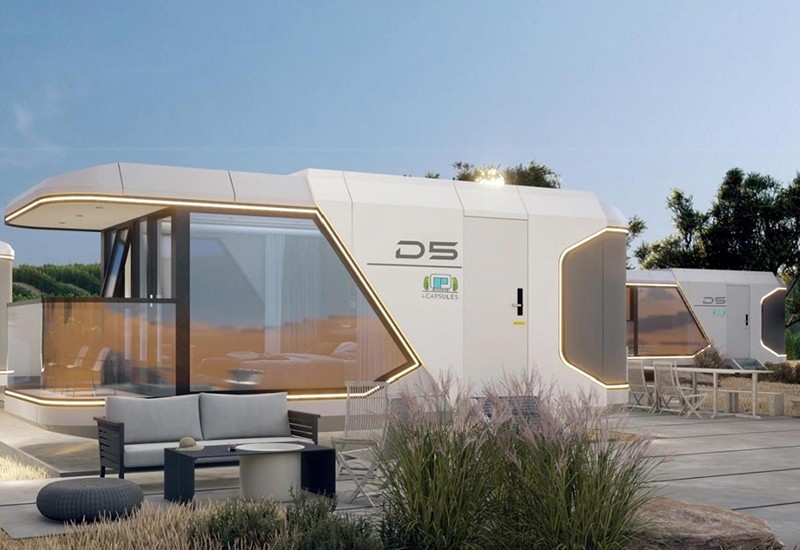

For instance, the shape of a capsule house is often aerodynamic. This is not just for aesthetic purposes but also to reduce wind resistance. When a capsule house is mobile, say on a trailer being towed on a highway, the aerodynamic shape helps prevent it from being buffeted by strong winds. A well - designed capsule house will also have a low center of gravity. This is important because it makes the house more stable, especially when it's on uneven ground or in motion.
The internal layout of the capsule house is also carefully planned. The placement of walls, partitions, and support structures is designed to distribute the weight evenly throughout the house. This helps prevent any one area from bearing too much stress, which could lead to structural failure.
Foundation and Anchoring
Even though capsule houses are often designed to be mobile, they still need a proper foundation or anchoring system when they're stationary. For a stationary capsule house, a simple concrete slab or a pre - fabricated foundation can be used. The concrete slab provides a stable base for the house and helps distribute the weight evenly into the ground.
If the capsule house is placed on a trailer or a mobile platform, proper anchoring is essential. Tie - down straps and stabilizers are used to secure the house to the trailer or the ground. These anchoring systems prevent the house from shifting or tipping over, especially during high winds or when the trailer is in motion.
Testing and Certification
Before a capsule house hits the market, it goes through a series of rigorous tests to ensure its structural stability. These tests include load - bearing tests, where the house is subjected to weights that simulate the maximum occupancy and interior fixtures. Wind tunnel tests are also conducted to evaluate how the house performs under different wind conditions.
Many capsule houses also need to meet certain building codes and standards. These codes are in place to ensure the safety and stability of the structure. For example, in some regions, capsule houses need to meet the same seismic resistance standards as traditional homes if they're going to be placed in earthquake - prone areas.
Real - World Performance
In the real world, capsule houses have proven to be quite stable. There are many examples of capsule houses being used in various settings, from remote vacation spots to urban areas. They've withstood extreme weather conditions, including heavy rains, strong winds, and even minor earthquakes in some cases.
Mobile capsule houses, like those used as mobile hotels, are constantly on the move. They travel long distances on highways, and yet, they maintain their structural integrity. This is a testament to the quality of their construction and design.
Maintenance and Inspection
To ensure the long - term structural stability of a capsule house, regular maintenance and inspection are necessary. Just like any other building, wear and tear can occur over time. The steel frames may need to be checked for rust, and the outer shell may need to be inspected for cracks or damage.
It's also important to keep the interior of the capsule house in good condition. Overloading the house with too much weight can put additional stress on the structure. Regularly checking the foundation or anchoring system is also crucial, especially if the house is mobile or located in an area prone to natural disasters.
Why Choose Our Capsule Houses?
As a supplier, we take pride in offering capsule houses that are not only stylish and functional but also extremely stable. Our team of experienced engineers and designers work hard to ensure that every capsule house we produce meets the highest standards of structural stability.
We use only the best materials in our construction process, and our houses are thoroughly tested before they leave the factory. Whether you're looking for a Prefab Space Capsule House for a weekend getaway, a Mobile Space Capsule House for a unique mobile accommodation business, or a Modular Capsule House for a more permanent living solution, we've got you covered.
If you're interested in learning more about our capsule houses or are thinking of making a purchase, we'd love to hear from you. Contact us for a detailed discussion about your needs, and we can work together to find the perfect capsule house for you.
References
- "Structural Engineering Handbook" by S. C. Gupta
- "Materials Science for Civil Engineers" by D. M. Roy
So, there you have it! I hope this blog has given you a good understanding of how the structural stability of a capsule house is ensured. If you have any questions or want to start a conversation about purchasing a capsule house, don't hesitate to reach out.