

Does the Privacy Fence Series block wind?
As a supplier of the Privacy Fence Series, I often get asked whether our fences can effectively block wind. This is a valid concern, especially for those living in areas prone to strong winds or looking to create a more sheltered outdoor space. In this blog post, I'll delve into the science behind wind blockage, how our Privacy Fence Series performs in this regard, and the factors that influence its wind - blocking capabilities.
The Science of Wind Blockage
Before discussing our Privacy Fence Series, it's important to understand how wind interacts with barriers. Wind is essentially the movement of air from an area of high pressure to an area of low pressure. When it encounters an obstacle like a fence, several things can happen.
The wind can be deflected upwards and around the fence. The amount of deflection depends on the height, porosity, and shape of the fence. A solid, tall fence will deflect more wind upwards compared to a shorter or more porous one. Additionally, the wind can be slowed down as it passes through or around the fence. This reduction in wind speed is what we refer to as wind blockage.
The effectiveness of a wind - blocking structure is often measured by its porosity, which is the ratio of open space to the total area of the structure. A fence with low porosity (less open space) will generally block more wind than one with high porosity. However, a completely solid fence can create turbulence on the leeward side, which may not be desirable in some cases.
How the Privacy Fence Series Blocks Wind
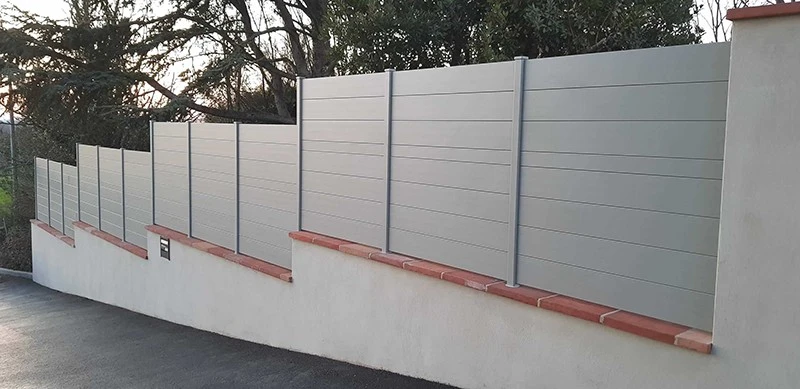
Our Outdoor Aluminum Privacy Panels are designed with wind blockage in mind. The panels are made of high - quality aluminum alloy, which allows for a relatively solid construction while still being lightweight and durable.
The design of the panels reduces the porosity, meaning there is less open space for the wind to pass through. As the wind hits the fence, a significant portion of it is deflected upwards and around the structure. This deflection not only blocks the direct force of the wind but also creates a calmer area on the leeward side of the fence.
The height of our Privacy Fence Series also plays a crucial role in wind blockage. Taller fences can intercept more wind at a higher elevation, preventing it from reaching the ground - level area behind the fence. Our standard fence heights are carefully chosen to provide optimal wind protection for most residential and commercial applications.
Moreover, the smooth surface of the aluminum panels helps to reduce turbulence. Unlike some fences with rough or irregular surfaces, our panels allow the wind to flow more smoothly around them, minimizing the creation of eddies and gusts on the leeward side.
Factors Influencing Wind Blockage
While our Privacy Fence Series is effective at blocking wind, several factors can influence its performance.
Fence Orientation: The direction in which the fence is installed relative to the prevailing wind direction is crucial. A fence installed perpendicular to the wind will block more wind than one installed parallel to it. Before installation, it's important to determine the dominant wind direction in the area and position the fence accordingly.
Surrounding Landscape: The presence of other structures, trees, or terrain features around the fence can also affect its wind - blocking capabilities. For example, if there are tall buildings or dense trees upwind of the fence, they may already deflect or slow down the wind before it reaches the fence. On the other hand, an open, flat landscape may allow the wind to approach the fence with full force.
Fence Configuration: The way the fence panels are arranged can impact wind blockage. A continuous, unbroken fence will generally block more wind than a fence with gaps or breaks. Our installation teams ensure that the panels are properly aligned and connected to create a seamless barrier against the wind.

Comparing with Other Aluminum Products
In addition to our Privacy Fence Series, we also offer Aluminum Dock Frame and Aluminum Gazebo. While these products are not primarily designed for wind blockage, they can still have some impact on wind flow in their respective areas.
The Aluminum Dock Frame is mainly used for docks and piers. Its open - frame design allows the wind to pass through easily, so it does not provide significant wind blockage. However, it can be combined with our Privacy Fence Series if wind protection is needed around the dock area.
The Aluminum Gazebo, on the other hand, has a more enclosed structure compared to the dock frame. It can provide some shelter from the wind, especially when the sides are fully enclosed. But in terms of overall wind - blocking effectiveness, it is not as efficient as the Privacy Fence Series, which is specifically engineered for this purpose.
Real - World Applications
Our Privacy Fence Series has been used in a variety of real - world applications where wind blockage is a concern. In coastal areas, where strong ocean winds are common, homeowners have installed our fences to create a more comfortable outdoor living space. The fences not only block the wind but also provide privacy, which is an added bonus.
Commercial properties, such as restaurants with outdoor seating areas, have also benefited from our Privacy Fence Series. By blocking the wind, the fences make the outdoor areas more inviting for customers, even on windy days.
Conclusion
In conclusion, the Privacy Fence Series is an effective solution for blocking wind. Its solid construction, optimal height, and smooth surface design work together to deflect and slow down the wind, creating a more sheltered area behind the fence. While factors like fence orientation, surrounding landscape, and configuration can influence its performance, our installation teams are trained to ensure that the fence is installed in the most effective way possible.
If you're interested in learning more about our Privacy Fence Series or other aluminum products, or if you're ready to start a project and discuss your specific wind - blocking and privacy needs, we'd love to hear from you. Contact us to start a procurement discussion and find the perfect solution for your outdoor space.
References
- "Windbreak Design and Performance" - Agricultural Handbook No. 670, United States Department of Agriculture
- "The Physics of Wind and Structures" - A textbook on the interaction between wind and various structures.